
[Pouch formats]
Filling Solutions for Stand-Up Pouches
Updated
Check stand-up pouch dimensions, opening and fill requirements. Compare suitable configurations for your product and closure format.
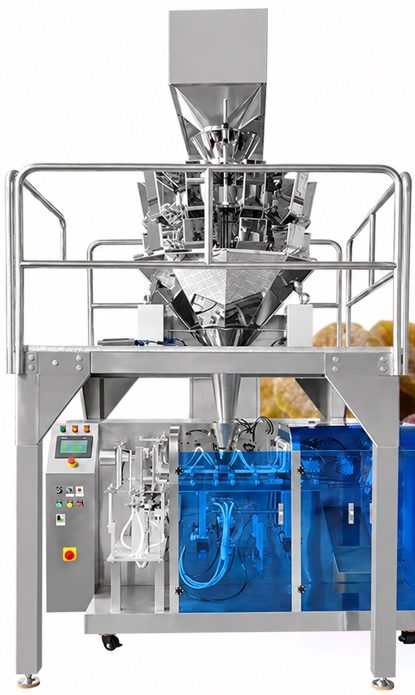
Stand-up pouches can be filled through an open top, a zipper opening or a spout. Each route needs matching grippers, opening tools and closure equipment. Define the pouch dimensions and send a sample to specify the handling arrangement.
[01]
Define the Stand-Up Pouch
A stand-up pouch, or doypack, has a bottom gusset that lets it stand on a shelf. Measure the empty pouch and use the same reference edges for every size. The pouch specifications guide provides the drawing fields, the size chart connects fill weight, density and outside dimensions, and our quad seal pouch guide compares four-corner side-gusseted formats and machine handling against flat-bottom and standard gusset bags.
| Detail | Why we ask |
|---|---|
| Width and length | Checked against the catalog size range |
| Gusset depth | Affects how the pouch opens and stands |
| Film structure | Matters for sealing and gripping |
| Closure format | Decides which listing applies |
| Weight or volume per pouch | Decides the space left for sealing |
[02]
Premade or Rollstock
Premade pouches are made elsewhere and arrive as separate bags. The machine picks one up, opens it, fills it, seals it and releases it. Rollstock machines form the bag from film as they run. Premade-pouch equipment starts with these individually supplied bags.
The choice affects pouch cost, film options and changeover. With premade pouches, a new size can need new grippers or settings, and two pouches that look alike aren't necessarily interchangeable. For a direct engineering breakdown of preformed pick-fill-seal versus rollstock horizontal form-fill-seal equipment, read our doypack machine comparison guide, or see the how to choose guide for a wider look at machine types.
[03]
Open-Top, Zipper or Spout
These are closure formats that can sit on the same stand-up body, and a pouch can have a zipper and a gusset together.
- Open-top: the machine opens the mouth, fills it and heat seals the top.
- Zipper: the machine has to open a pouch that has a zipper. Specify the zipper position and opening detail against the pouch sample.
- Spout: the pouch has a fitment. It may be filled through the open top before capping, or through the spout. A spout doesn't mean it's filled through the spout.
The catalog treats these differently. The spout route has its own listing with cap feeding and screwing, which is a different step from sealing an open top. Pick the format first and we can go straight to the right listing.
[04]
Product and Fill Volume
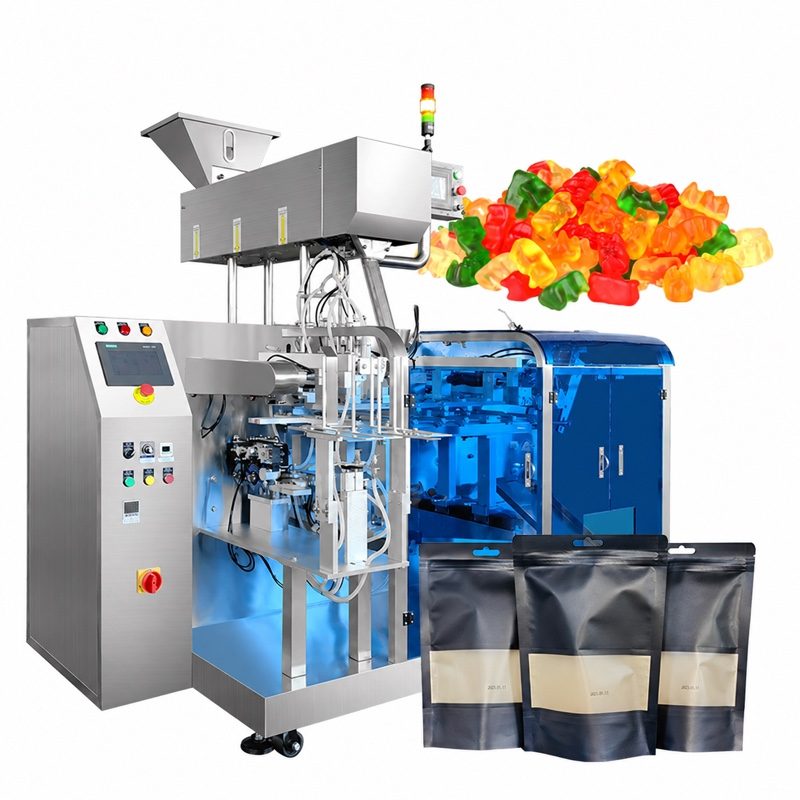
The product decides much of the filling method.
| Product type | Dosing route | Read more |
|---|---|---|
| Granules and solid pieces | Weighing, usually a multihead weigher | LV-210 listing |
| Liquids and pastes | Pump and nozzle | Liquid pouch filling |
| Powders | Auger assessed with production powder | Powder pouch filling |
The catalog lists LV-210 for granules and pieces such as snacks, dried fruit and nuts, and for liquids and pastes. Powder projects follow the sample-assessment route described on the powder page. Fill volume is limited by pouch size, the headspace you need for sealing and product density, so give us the target weight or volume together with the pouch dimensions.
[05]
Compatibility Matrix
The matrix identifies the pouch handling sequence and the tooling details to specify for each filling route.
| Format / Check | Route | Catalog listing | What to confirm |
|---|---|---|---|
| Stand-up, open-top | Open, fill, seal | LV-210 platform listing | Pouch size within the listed range, sealing result on your film |
| Stand-up, zipper | Open zipper and mouth, fill, seal | LV-210 zipper tooling matched to samples | Zipper type, opening tools, and whether reclosure is required before final heat sealing |
| Stand-up, spout | Separate capping route | LV-160 spout pouch listing | Spout diameter, cap type, fill route, volume range |
The LV-210 listings show a bag width of 90 to 210 mm and a bag length of 110 to 330 mm. Use those platform bands to shortlist, then check the film, gusset, opening and closure with representative production samples.
[LINEVO Machine Configuration]
[LV-210]
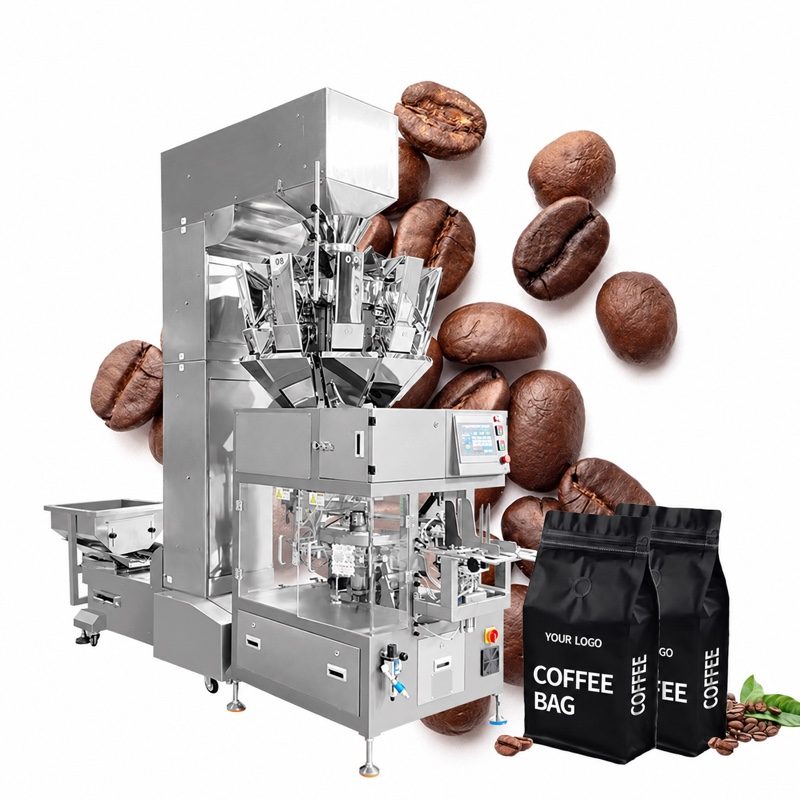
LV-210 Premade Pouch Weighing and Filling Machine
A premade-pouch configuration for coffee beans and other suitable solid products. The process retrieves and opens a pouch, measures and fills product, seals the pouch and discharges the finished pack.
- Products
- granule, pieces
- Applications
- Coffee beans and other suitable solid products.
- Pouch formats
- premade pouch, zipper pouch (tooling matched to the pouch sample)
| Specification | Value | Condition |
|---|---|---|
| Pouch width | 90–210 mm | See table note |
| Pouch length | 110–330 mm | See table note |
| Listed packing speed | 20–70 bags/min | Machine speed range; establish acceptable-pack output with the specified product, fill weight and pouch. |
| Listed power | 3.5 kW | See table note |
| Listed supply | 220 V, 50/60 Hz | See table note |
| Listed dimensions | 2150 × 1350 × 1300 mm | Catalog machine dimensions; confirm the complete line layout and access space. |
Machine baseline; match the quoted configuration to representative product and pouch samples.
[Configuration Scope]
- Premade pouch retrieval, opening and sealing[Included]
- Weighing and filling arrangement
- Zipper handling, feeding and product change parts
Define the product feed, target fill and pouch specification, then agree output and fill measurements for factory acceptance.
The LV-210 base scope includes pouch pickup, opening and sealing. Specify the weighing and filling arrangement from the product and fill target, and match zipper tooling to the pouch geometry and sample. The LV-210 model page has the platform summary. For the spout route, the LV-160 entry on the liquid page shows what that listing covers.
[06]
Pouch Sample Checklist
Send us:
- A clear photo of the pouch, front and side
- Measured width, length and gusset depth
- Film structure and thickness, if known
- Closure: plain, zipper or spout, with spout diameter if any
- The product and target fill amount
- A few empty pouches, once we confirm quantity and where to send them
Agree quantities and shipping instructions before dispatch. For product trials, use the sample testing process to check every production pouch variant.
[07]
Review Your Pouch
Use the measured pouch geometry to define opening, gripping and closure tooling for the selected product. The quotation states the scope, and the price guide explains what affects cost.
[08]
Frequently Asked Questions
- 01Does a stand-up pouch need a special machine?
Match the pouch width, length, gusset, film and closure details to the LV-210 platform and tooling specification.
- 02Can the same machine run different pouch widths?
A width change can need adjusted or replaced grippers. Evaluate changeover by timing the adjustment, setup checks and first accepted packs for each intended format.
- 03Is zipper handling included?
The quotation identifies any included zipper-opening or reclosing tooling. Send the pouch sample and zipper details so its scope can be specified.
[Related Pages]
- [Product filling]Liquid Pouch Filling Machines for Your Product and PouchReview liquid and paste pouch filling options by viscosity, fill size and closure type. Share product details to check a suitable configuration.View page →
- [Product filling]Powder Pouch Filling Machines for Premade PouchesCompare powder dosing, dust-control considerations and pouch sealing requirements. Review your powder properties, target weight and pouch sample.View page →
- [Buying guide]Pouch Specifications to Confirm Before Machine SelectionPrepare pouch dimensions, material, opening, zipper or spout details and fill targets. Use the checklist for a focused compatibility review.View page →
- [Buying guide]How to Read a Stand-Up Pouch Size ChartCompare stand-up pouch width, height, gusset and product-specific capacity estimates. Measure bulk density to match fill weight to usable pouch space.View page →
- [Buying guide]Doypack Machine: Premade Pick-Fill-Seal vs Rollstock HFFSCompare premade pick-fill-seal Doypack fillers against integral rollstock HFFS machines across pouch geometry, SKU changeover, seal standards, and throughput.View page →
- [Buying guide]Quad Seal Pouch: Corner-Seal Structure & Machine HandlingCompare quad seal pouches against flat-bottom box and side-gusset bags, and verify gripper width, gusset unfolding, and top heat sealing on premade fillers.View page →
[Request]
Check Pouch Compatibility
Discuss the equipment scope and next steps with the LINEVO team.