
[Applications]
Pouch Filling Machines for Sauces
Updated
Review sauce viscosity, particles, fill temperature and pouch format. Define a sample-based filling and closure configuration for your product.
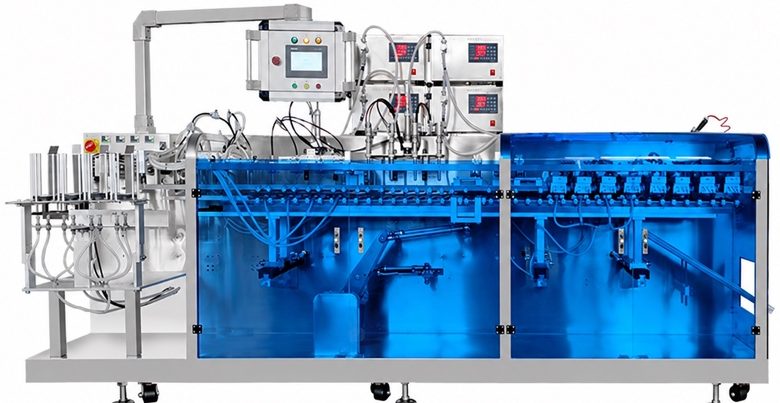
Sauce goes into a premade pouch with a pump and a nozzle, then the pouch is sealed. The sauce itself decides how hard that is. It drips or strings at the nozzle, carries pieces, leaves product in the seal zone and has to be cleaned out between recipes. We match the dosing and sealing configuration to those operating conditions.
[01]
Sauce Properties
A sauce isn't one material. Ketchup, mayonnaise, chili sauce and hot pot base differ in thickness, oil and particles, and the same recipe can behave differently warm and cold. The catalog lists thick or particle-bearing sauces like these as the intended products. Ketchup belongs to the same engineering group; its viscosity and filling temperature determine the dosing settings.
Measure the sauce at its filling temperature:
| Property | Measurement |
|---|---|
| Viscosity | Value and measuring conditions, or a description |
| Temperature | At the filling point |
| Particles | Type, largest size, share of the product |
| Separation | Whether oil or water separates in the hopper |
| Fill amount | Weight or volume per pouch |
| Pouch | Format, dimensions, film, any spout |
For related liquids, see the liquid and paste pouch filling page.
[02]
Particle and Temperature Limits
Set the largest particle size and filling temperature in the specification so the valve, nozzle and product path can be assessed together.
Use the largest pieces and the highest and lowest production temperatures when assessing the product path. Particle clearance governs the valve and nozzle opening. For hot filling, assess steam, condensation and film temperature at the seal as part of the trial.
| Situation | What to raise |
|---|---|
| Smooth, filled cold | Viscosity and fill amount |
| Sauce with pieces | Largest piece size; do pieces settle or float? |
| Hot-filled | Nozzle temperature, steam near the seal, film heat tolerance |
| Oily or separating | How it's stirred or held before the pump |
[03]
Dosing and Nozzle Choice
The sauce listing names a servo piston pump and an anti-drip nozzle, with volumetric filling. The project specification defines their size and arrangement. A piston pump moves a set volume per stroke, which suits thick products. Whether that volume lands on your target weight depends on sauce density and flow.
Check the dosing arrangement in this order:
- Pump size against fill amount per pouch
- Nozzle opening against particle size
- Whether the nozzle enters the pouch or fills from above
- How the nozzle cuts off to stop drips and strings
Set the fill tolerance and measurement method before evaluating the sauce configuration. The filling accuracy guide shows how.
[LINEVO Machine Configuration]
Automatic High-Speed Premade Pouch Sauce Packaging Machine
Premade-pouch sauce filling with servo piston dosing and an anti-drip nozzle. Match the configuration to sauce behaviour and pouch format.
- Products
- paste
- Applications
- Ketchup, mayonnaise, chili sauce, hot-pot seasonings and other viscous or particle-containing sauces (sauce and condiment manufacturers)., Premium food brands handling premade pouches (doy-pack, gusset or spout bags).
- Pouch formats
- premade pouch: doy-pack, gusset or spout bag
[Configuration Scope]
- Volumetric filling
- servo-driven piston pump dosing
- anti-drip filling nozzle
- PLC controls
- Siemens PLC and HMI interface
Specify sauce viscosity, particles, temperature and cleaning requirements. The equipment quotation defines output conditions, pouch tooling, contact materials, controls and utilities.
The quotation defines pouch dimensions, operating output and utility requirements for the selected sauce configuration.
[04]
Clean Seal Zone
Sauce on the inside of the pouch mouth is a common cause of weak seals. Keep product clear of the seal zone and evaluate seal quality with the production film, sauce and filling temperature. Define the sealing arrangement and acceptance checks in the equipment specification.
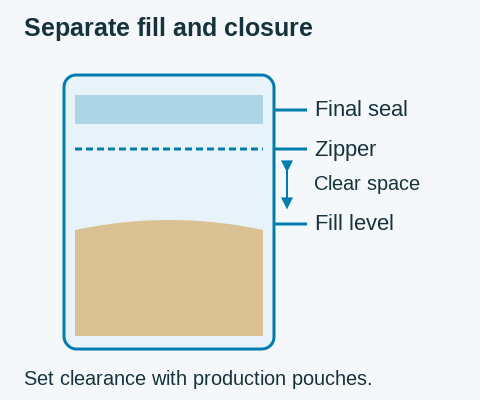
What puts sauce in the seal zone:
- Drips or strings as the nozzle pulls out
- Splash during the fill
- Foam or air bubbles pushing product up
- A pouch mouth that is narrow next to the nozzle
- A dirty seal layer before sealing
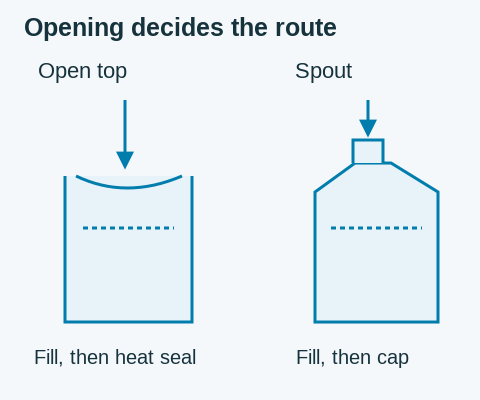
If your pouch has a spout, confirm early whether it's filled through the open top or the spout, since the closing step differs. The liquid page covers both routes.
[05]
Cleaning and Changeover
Specify product-contact materials, PLC and HMI requirements in the equipment scope. Define the cleaning method and required hygiene documentation for the sauce and destination market.
If you run several sauces, tell us how often you switch and what your cleaning routine looks like. A change in pouch width can also need new grippers or settings. The pouch specifications guide covers the dimensions that affect changeover.
[06]
Trial Planning
Run the production sauce and film at the intended filling temperature. Record dose settings, fill measurements, particle passage, nozzle cutoff and seal observations. Include recipe changes and cleaning checks where they affect the proposed configuration.
Agree sample quantities, handling conditions and shipping instructions before dispatch. Carry the accepted measurements into the FAT plan. The sample testing page explains trial preparation.
[07]
Project Review
Send the sauce, the pouch and the fill amount. We'll define the dosing, pouch tooling and acceptance requirements for the sauce configuration. Cost comes in the quotation, and the price guide explains the factors. Choosing between machine types? The how to choose guide compares them.
[08]
Frequently Asked Questions
- 01Is ketchup a different machine from other sauces?
No. In the catalog it sits in the sauce group. We review its viscosity, temperature and particles like any other sauce.
- 02Can you tell me the speed for sauce pouches?
Operating output is specified for your product, fill amount and pouch in the equipment quotation.
- 03Does the machine meet a hygiene standard?
Name the hygiene standard, cleaning method and documentation required for your market. Ask the quotation to identify the applicable machine design and supporting documents, including any requirements still to be resolved before ordering.
[Related Pages]
- [Product filling]Liquid Pouch Filling Machines for Your Product and PouchReview liquid and paste pouch filling options by viscosity, fill size and closure type. Share product details to check a suitable configuration.View page →
- [Buying guide]What Affects Pouch Filling Machine Price?Understand the scope behind pouch-filling quotations. Compare dosing, pouch handling, closure, options and delivery terms before reviewing a proposal.View page →
- [Buying guide]How to Evaluate Pouch Filling AccuracyDefine test conditions, sample sizes and weight checks for pouch filling. Compare accuracy claims only when product and operating conditions match.View page →
- [Engineering & support]Product and Pouch Sample EvaluationPlan a pouch-filling evaluation with production materials, fill and closure measurements, timed output, acceptance criteria and sample handling.View page →
[Request]
Review My Sauce Filling Project
Discuss the equipment scope and next steps with the LINEVO team.