
[Buying guide]
What Manual, Semi-Automatic and Tabletop Pouch Filling Can Do
Updated
Compare manual, semi-automatic and tabletop pouch filling by operator tasks, measured batch output, pouch handling and closure requirements.
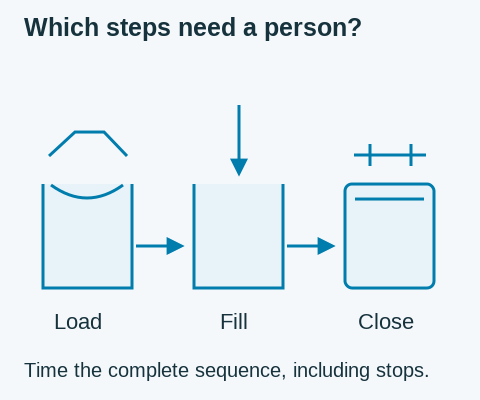
Small-batch pouch filling can use hand tools, a semi-automatic dosing station or a compact automatic sequence. Choose by the work left to the operator and the acceptable pouches completed over the whole run. Product, pouch opening and closure decide which tasks can be combined.
[01]
What Small Batch Means Here
Measure the complete batch: setup, loading, filling, sealing or capping, routine checks, stops and cleaning. Record accepted finished pouches separately from rejects. This establishes the output and labor requirement for your current process.
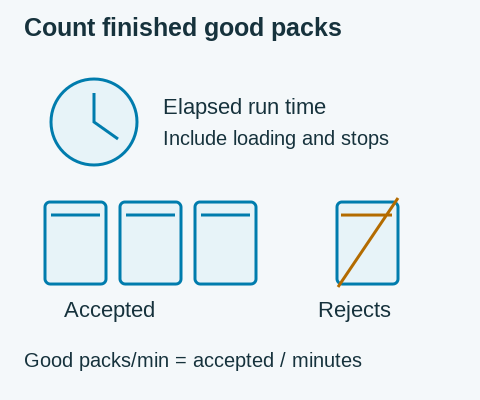
Good packs/min = accepted finished pouches / elapsed minutes. For batch planning, elapsed batch time = setup time + running time + changeover and cleaning time. Use measured times from your own product and pouch. The selection guide connects that requirement to the equipment specification.
[02]
Manual Filling
An operator opens or supports the pouch, measures the product, fills it and transfers it to sealing or capping. A rack can hold an open-top pouch upright; a scale checks net weight. Keep the mouth clear so product stays out of the final seal or cap threads.
Time each task in the complete sequence. Record where the operator waits, rehandles a pouch or corrects a dirty closure. Repeat with the production product and each pouch size. Those observations identify whether dosing, pouch support or closing is the useful first step to mechanize.
[03]
Semi-Automatic Filling
A semi-automatic station carries out a defined operation while the operator presents or removes each pouch. Specify who opens and positions the pouch, starts the dose, transfers it and closes it. A dosing cycle rate becomes finished-pack output only when those surrounding tasks keep pace.
For liquids, evaluate nozzle clearance, drip cutoff and the closing step. For powders, evaluate flow and dust near the mouth. For pieces, assess weighing and transfer into the opening. Compare stations using the same fill target, pouch and acceptance checks.
[04]
Tabletop Automatic Filling
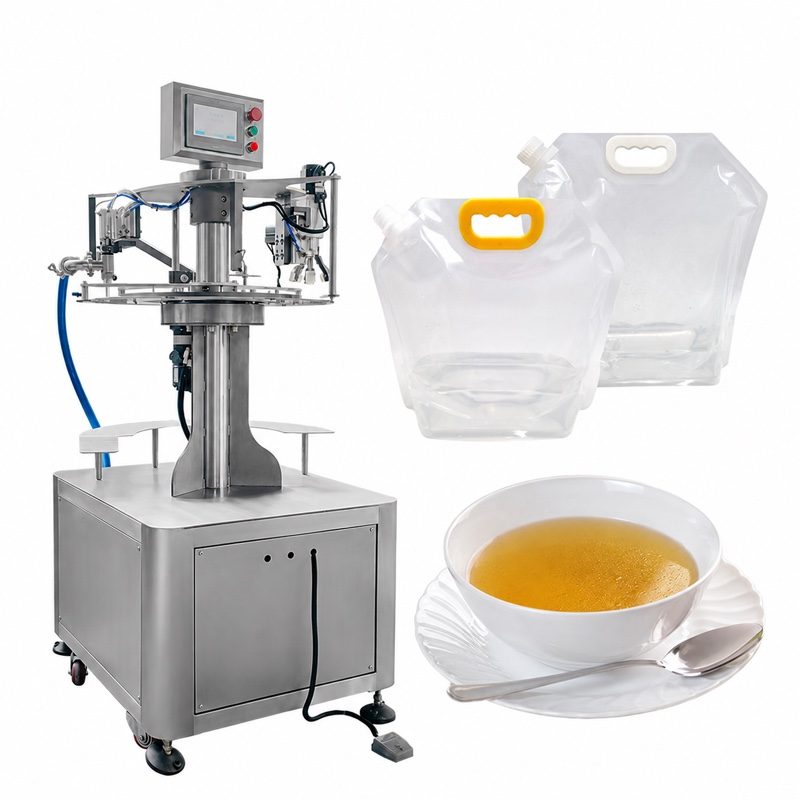
Tabletop describes where equipment sits; automatic describes which actions it performs. A compact station can automate dosing and capping while an operator still loads each pouch. Check the complete sequence, work surface, utilities, product feed and clearance for cleaning.
For a spout pouch, match the fitment position, inner diameter, cap and thread to the holding and closing parts. For an open-top pouch, check how the mouth is opened, held and transferred to the sealer. Use a timed run to measure the complete operation.
For a floor-standing automatic route, LINEVO's LV-160 spout-pouch configuration combines pouch loading, filling and capping. Check its complete footprint and working access when comparing it with tabletop stations. Its catalog speed is 10–15 bags/min, with output and dosing specified for the actual liquid and fill volume.
[05]
Boundaries by Pouch and Product
| Pouch or product | Work to resolve | Automatic route to assess |
|---|---|---|
| Open-top stand-up or flat pouch | Hold open, fill, keep seal area clear, heat seal | LV-210 platform; tooling matched to film and pouch geometry |
| Zipper pouch | Open zipper and mouth; specify reclosure and final seal | LV-210 zipper tooling matched to production samples |
| Spout pouch | Hold the fitment, fill, feed and tighten cap | LV-160 spout route, with cap and spout drawings |
| Powder | Meter product while managing flow, aeration and dust | Sample-based dosing assessment on the powder page |
| Granules and pieces | Weigh and transfer without bridging or damage | LV-210 weighing and pouch-filling arrangement |
| Liquid or paste | Control drips, foam and particle passage | Pump/nozzle or servo-piston sauce route |
Use the pouch specifications checklist to document the opening and closure geometry. The size chart connects fill mass, density and pouch dimensions; stand-up pouch selection covers handling.
[06]
When an Automatic Premade Line Fits
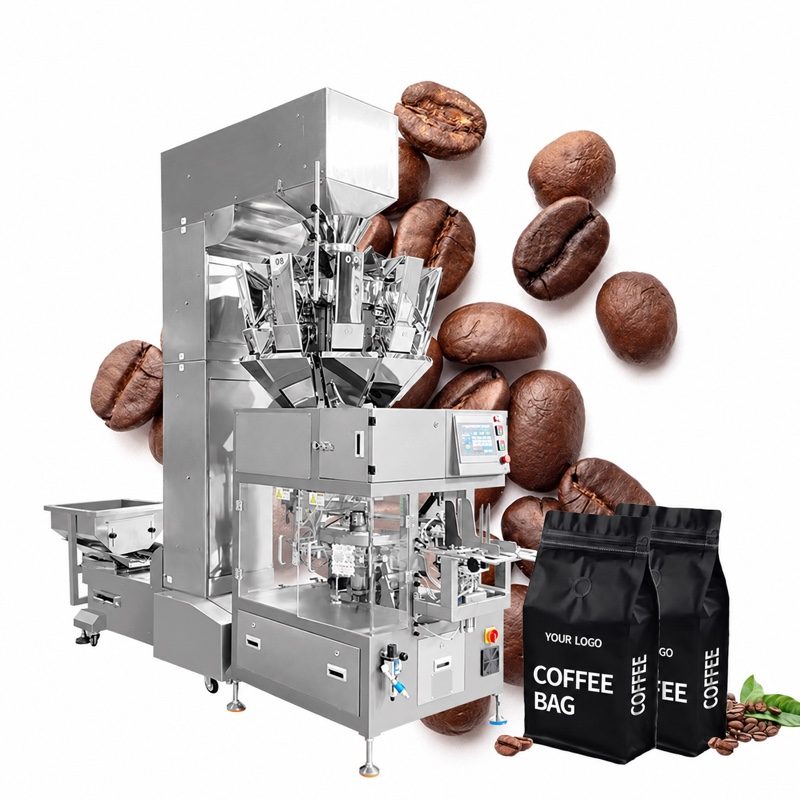
An automatic line becomes useful when repeated loading, dosing or closing work limits the accepted output you need. Compare the complete batch time and staffing at the same fill and quality criteria, including changeover and cleaning. A short run with many format changes can spend more time preparing than filling.
The LV-210 catalog lists 20–70 bags/min, 90–210 mm pouch width and 110–330 mm pouch length. Use these as platform selection bands, then evaluate the actual product, fill weight, film and closure together.
[07]
What to Send Us
Share your timed batch record and identify which tasks still require an operator. Include the product, pouch specification and fill target. A sample evaluation can then focus on the dosing, opening or closure question that determines the next step.
[Related Pages]
- [Buying guide]How to Choose the Right Pouch Filling ConfigurationUse product, pouch, output and closure requirements to narrow your filling-machine options. Prepare a practical brief for a sample-based review.View page →
- [Buying guide]How to Read a Stand-Up Pouch Size ChartCompare stand-up pouch width, height, gusset and product-specific capacity estimates. Measure bulk density to match fill weight to usable pouch space.View page →
- [Pouch formats]Filling Solutions for Stand-Up PouchesCheck stand-up pouch dimensions, opening and fill requirements. Compare suitable configurations for your product and closure format.View page →
- [Product filling]Liquid Pouch Filling Machines for Your Product and PouchReview liquid and paste pouch filling options by viscosity, fill size and closure type. Share product details to check a suitable configuration.View page →
- [Product filling]Powder Pouch Filling Machines for Premade PouchesCompare powder dosing, dust-control considerations and pouch sealing requirements. Review your powder properties, target weight and pouch sample.View page →
- [Equipment model]LV-210 Premade Pouch Weighing and Filling MachineReview the LV-210 premade pouch weighing and filling configuration: catalog pouch range, listed output, utilities and the items to confirm in a quote.View page →
- [Engineering & support]Product and Pouch Sample EvaluationPlan a pouch-filling evaluation with production materials, fill and closure measurements, timed output, acceptance criteria and sample handling.View page →
- [Buying guide]Pouch Specifications to Confirm Before Machine SelectionPrepare pouch dimensions, material, opening, zipper or spout details and fill targets. Use the checklist for a focused compatibility review.View page →
[Request]
Review My Batch Size
Discuss the equipment scope and next steps with the LINEVO team.