
[Buying guide]
Piston Filler vs Flow Meter for Viscous Liquid Pouch Filling
Compare piston, electromagnetic, Coriolis and weigh filling for viscous liquids. Check temperature, particles, air, nozzle cutoff and cleaning before trials.
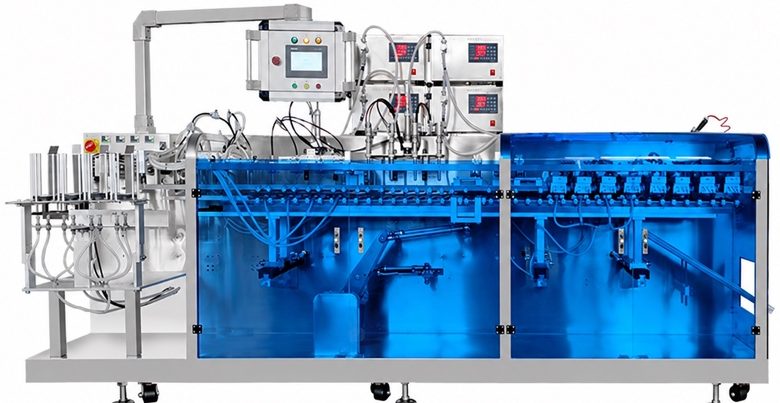
A piston filler meters a volume by moving a piston through a cylinder. For viscous liquid pouch filling, compare it with an electromagnetic flow meter when volume is the target, or a Coriolis meter when mass is the target. The choice depends on product flow, conductivity, particles, air and nozzle cutoff, as well as viscosity.
Start with the quantity you need in each pouch. Then check whether the proposed system can deliver it cleanly at production conditions. The liquid pouch filling machine overview connects dosing to pouch handling and closure.
[01]
Piston Filler vs Flow Meter: Which Fits?
Use a piston as a candidate for pumpable viscous products with a suitable valve and nozzle. Evaluate flow-meter control against the actual liquid properties and fill target. A flow meter measures passing product; it still needs a feed arrangement and a valve or pump control to stop the dose.
| Method | Quantity measured | Useful selection condition | Main check before selection |
|---|---|---|---|
| Piston filler | Displaced volume | Viscous product; repeatable cylinder refill | Complete refill, density stability and particle passage |
| Electromagnetic flow meter | Volume flow | Conductive liquid; volume target | Conductivity, full measuring tube and cutoff |
| Coriolis flow meter | Mass flow | Mass target; changing product density | Entrained gas, pressure loss and batch response |
| Weigh filling | Mass on a load cell | Net mass controls acceptance | Tare, pouch support, vibration and product still falling after cutoff |
A servo piston filling machine retains the volumetric principle. Servo control adjusts piston motion, speed and recipes; weighing requires a separate mass measurement. LINEVO's sauce configuration lists servo-driven piston pump dosing and an anti-drip nozzle. The sauce pouch filling page covers that application and its pouch formats.
[02]
Viscosity, Temperature and Fill Weight
Use viscosity to assess movement through the filler, and density to relate volume to mass. These properties answer different questions. A sauce that becomes harder to pump as it cools may need different refill and discharge settings. Any density change separately alters the mass represented by a given volume.
For a volumetric dose:
Delivered mass = delivered volume × density at the filling condition.
Using volume in mL and density in g/mL gives mass in grams. Use the volume that actually reaches the pouch. Incomplete cylinder refill, trapped air or product retained after cutoff can separate that result from the nominal piston setting.
Record minimum, normal and maximum production temperatures. Measure viscosity at those conditions and include the instrument, spindle and speed, or shear rate. AMETEK Brookfield's More Solutions to Sticky Problems explains why non-Newtonian products have an apparent viscosity tied to the measurement conditions. One cP value without those conditions is a poor basis for comparing fillers.
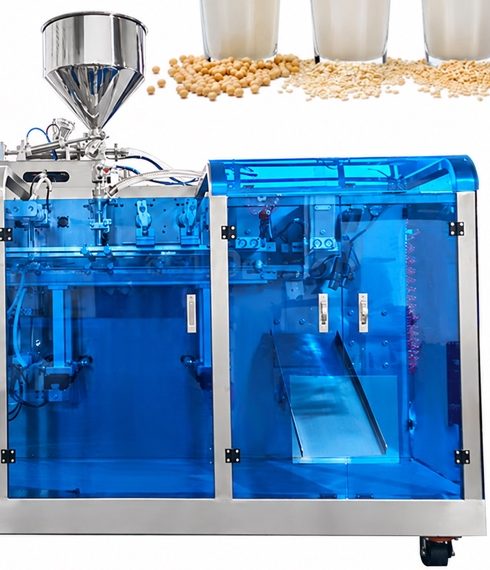
Test refill at the intended pace, including low feed level and restart. If a piston cannot refill completely at the coldest normal product condition, increasing discharge speed will not restore the missing dose. For comparing recorded fill results, use the filling accuracy guide.
[03]
Electromagnetic, Coriolis or Weigh Filling?
Select the measurement principle before comparing sensor accuracy figures. Evaluate the complete fill cycle with the supply, valve and nozzle that will be used on the machine.
Electromagnetic: conductive liquid and a volume target
An electromagnetic meter needs sufficient liquid conductivity and a full measuring tube. Check the selected instrument's conductivity requirement and wetted materials. A nonconductive oil needs another measuring principle. Viscosity still matters to the pump and flow path, even when it has little influence on the electromagnetic measurement itself.
Endress+Hauser's Understanding electromagnetic flowmeters: Features and benefits describes these measurement conditions. For pouch filling, include the batch valve's response and the product left between meter and outlet in the evaluation.
Coriolis: direct mass measurement
A Coriolis meter measures mass flow directly. That makes it a candidate when the target is mass and density varies. Size the meter and feed system for the intended flow and available pressure. Endress+Hauser's Dosimass Technical Information treats flow range and pressure loss as selection inputs.
Aerated product needs a gas-specific trial. Gas can disturb a Coriolis measurement, and performance depends on the sensor and flow conditions. Emerson's Micro Motion white paper on entrained gas explains both the mixture-density change and measurement disturbances. Compare first fills, steady running and restarts with the actual aeration present.
Weigh filling: control the quantity in the supported pouch
Weigh filling uses load-cell feedback to control the dose. Define tare, pouch support and isolation from vibration or nozzle forces. Account for product that continues into the pouch after the stop command. PENKO's Filling Systems for Liquids describes feed control and in-flight compensation.
A downstream checkweigher measures completed packs. Specify separately whether its results adjust later doses or whether a load cell controls each fill directly.
When bubbles make piston fill weights drift
Air takes up part of a volumetric dose. With changing aeration, the same nominal volume can contain different product mass. Check feed leaks, low tank level and air introduced during mixing or transfer. Distinguish gas already in the feed from foam created as the product enters the pouch.
For deliberately aerated products, preserve the required texture while comparing mass-control options. Evaluate Coriolis or weighing with that product state, and keep final net mass and texture in the acceptance criteria.
[04]
Particles: Check Every Valve and Opening
The smallest usable passage and the closing surfaces matter more than the word “piston.” Record the largest particle dimensions, shape, softness or hardness, concentration and settling behavior. Soft fruit pieces need a damage check; hard seeds need passage and seating checks.
In a rotary valve, the port redirects product between the inlet, cylinder and outlet. Check the opening, rotor clearances and closing movement for trapped or cut pieces. In a ball or other check valve, particles can obstruct the seat and prevent full closure. Compare the actual valve designs using your product.
Trace the full path: feed vessel, inlet, valve, cylinder or meter, connecting pipe, nozzle and pouch opening. A generous valve opening is little help if the nozzle becomes the restriction. For through-spout filling, include the fitment's internal passage and the nozzle clearance in the pouch specification.
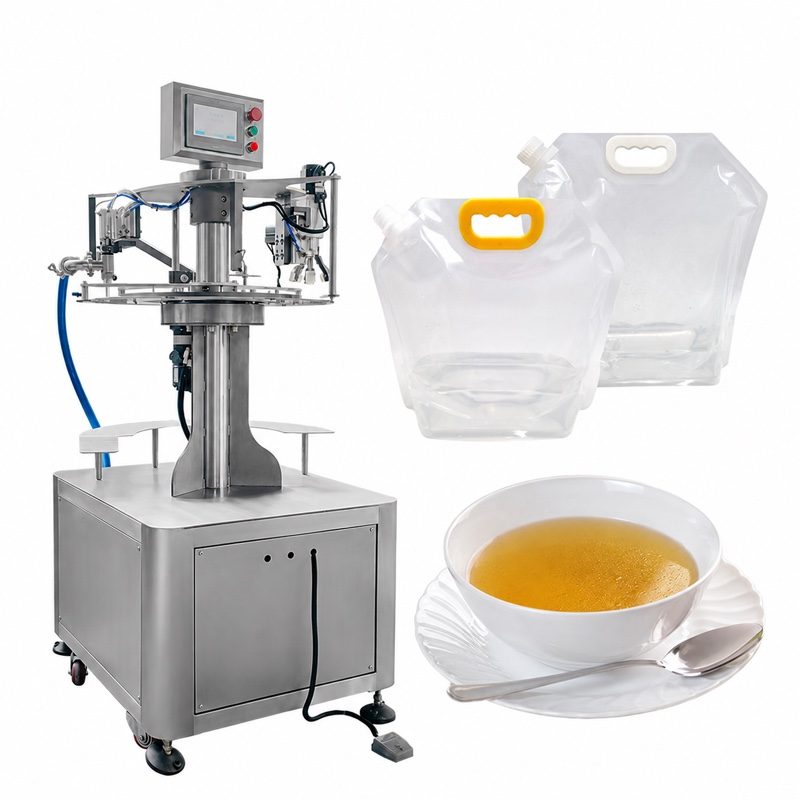
Collect product before and after repeated filling cycles. Compare particle condition and distribution, then inspect the valve seats and nozzle for retained pieces. Include the highest normal particle loading and stop/restart conditions in the trial.
A leaking filler valve and a leaking finished pouch need separate diagnosis. First trace quantity loss or drips through the product path. Then inspect whether product reached the sealing faces and assess the closed pouch.
[05]
Cutoff: Keep Product Out of the Seal Zone
Separate shutoff, suck-back and nozzle movement when specifying the end of a fill. Each addresses a different part of product delivery.
| Function | What it changes | What to observe in a pouch trial |
|---|---|---|
| Positive shutoff | Closes the outlet or product path | Tail, drip and valve seating after closure |
| Suck-back | Retracts product near the nozzle tip | String break and retained product between fills |
| Diving or bottom-up movement | Changes the nozzle position during filling | Splash, foam, pouch contact and withdrawal clearance |
Diving motion needs enough space in the opened pouch and a withdrawal path that clears the product. Suck-back needs settings suited to the product and nozzle. Specify these functions individually when they are proposed for your application.
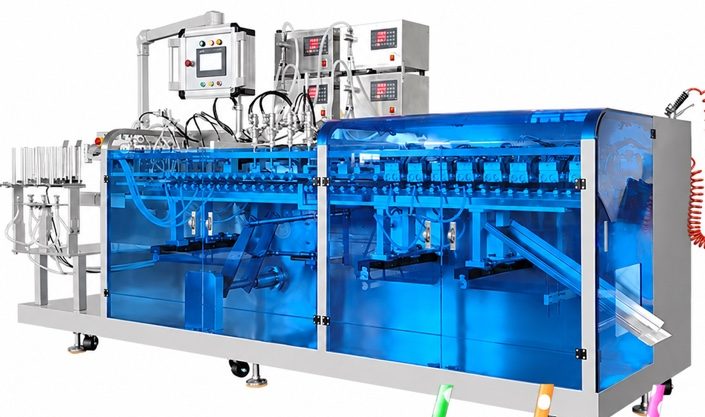
Watch the nozzle after the dose, during withdrawal and as the pouch moves away. Record drips, strings, splashes and wet seal faces alongside net mass. A pouch can meet its fill target while carrying product into the closure area.
[06]
Cleaning and Changeover: Compare the Whole Circuit
Compare cleaning access on the proposed equipment. CIP means cleaning in place through a configured circuit; COP involves removing parts for cleaning. Piston equipment can be designed for CIP, and a hygienic flow meter can sit in a circuit with parts that require removal.
For piston equipment, inspect access to the cylinder, piston seals, valve body and nozzle. For a flow-meter arrangement, include the supply pump, sensor, batch valve, hoses and nozzle. In both cases, assess drainage, retained product, seal handling and reassembly.
Time changeover from the last accepted pouch of the old product to the first accepted pouch of the next. Record elapsed downtime and person-time separately. Include product recovery, cleaning, verification, reassembly, settings and restart checks. This gives a useful comparison for frequent recipe, color or allergen changes.
[07]
Sample-Evaluation Parameters to Send LINEVO
Use the same production product, pouch and acceptance limits for each candidate. The sample-testing process covers preparation and test records. Copy these fields into your trial request:
| Parameter group | Information to provide |
|---|---|
| Product and temperature | Recipe or batch; minimum, normal and maximum filling temperatures |
| Flow and density | Viscosity with test method and temperature; density at filling conditions |
| Particles | Largest dimensions, shape, hardness, loading, settling and acceptable damage |
| Air and foam | Intentional aeration; feed-air sources; behavior after stops and at low tank level |
| Dose and feed | Target mass or volume, units, acceptance limits, required pace and feed arrangement |
| Pouch and nozzle | Production pouch drawing; open-top or through-spout route; usable opening and support |
| Meter-specific inputs | Conductivity for electromagnetic; bore, pressure budget and gas conditions for Coriolis; tare and support for weighing |
| Trial observations | First fill, steady run, low feed and restart; net mass, particle condition, cutoff and closure results |
| Changeover | Cleaning access, verification, reassembly, elapsed downtime and person-time |
Send LINEVO your dosing comparison and sample-evaluation parameters
. Include a product photo and pouch drawing so the discussion can focus on the feed, valve, nozzle and acceptance checks. Agree sample quantity and shipping instructions before dispatch.
[Related Pages]
- [Product filling]Liquid Pouch Filling Machines for Your Product and PouchReview liquid and paste pouch filling options by viscosity, fill size and closure type. Share product details to check a suitable configuration.View page →
- [Applications]Pouch Filling Machines for SaucesReview sauce viscosity, particles, fill temperature and pouch format. Define a sample-based filling and closure configuration for your product.View page →
- [Buying guide]How to Evaluate Pouch Filling AccuracyDefine test conditions, sample sizes and weight checks for pouch filling. Compare accuracy claims only when product and operating conditions match.View page →
- [Buying guide]Pouch Specifications to Confirm Before Machine SelectionPrepare pouch dimensions, material, opening, zipper or spout details and fill targets. Use the checklist for a focused compatibility review.View page →
- [Engineering & support]Product and Pouch Sample EvaluationPlan a pouch-filling evaluation with production materials, fill and closure measurements, timed output, acceptance criteria and sample handling.View page →
[Request]
Review My Dosing Parameters
Discuss the equipment scope and next steps with the LINEVO team.